
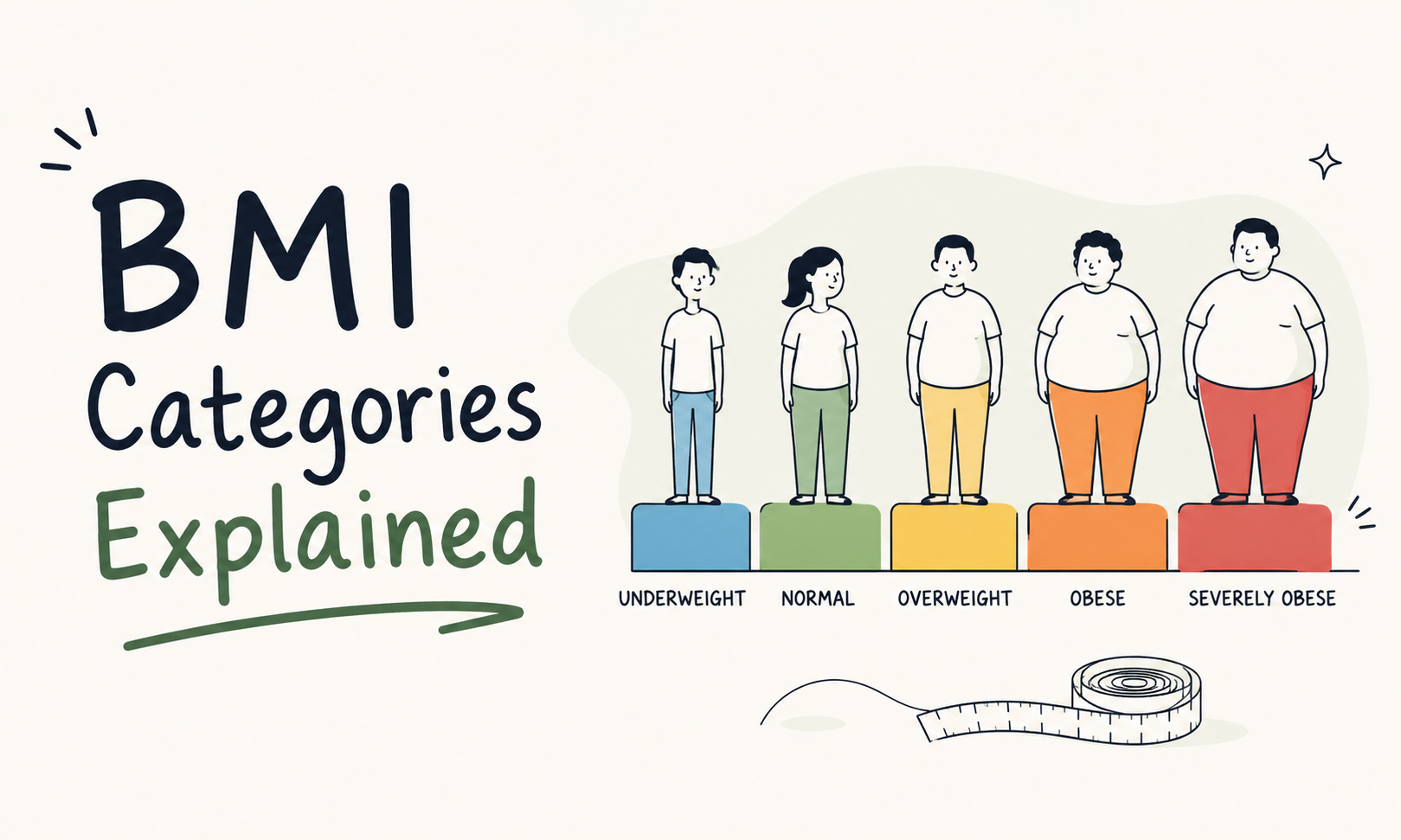
Body Mass Index (BMI) is one of the simplest tools used to determine whether your weight falls within a healthy range for your height. After calculating your BMI, the result is placed into one of four standard categories: Underweight, Normal Weight, Overweight, or Obesity.
These categories are used by healthcare professionals around the world to estimate potential health risks associated with body weight. While BMI doesn't directly measure body fat or overall fitness, it provides a useful starting point for understanding your health and deciding whether lifestyle changes may be beneficial.
In this guide, we'll explain each BMI category, what it means for your health, and how the categories compare with one another.
Underweight BMI Explained
An adult is considered underweight if their BMI is below 18.5.
Being underweight doesn't always mean someone is unhealthy, but it can increase the risk of several health problems if caused by poor nutrition or an underlying medical condition.
Common health risks associated with being underweight include:
- Nutrient deficiencies
- Reduced muscle mass
- Fatigue and low energy
- Weakened immune system
- Lower bone density
- Increased risk of osteoporosis
Some people naturally have a low BMI because of genetics or a fast metabolism. Others may become underweight due to illness, stress, or inadequate calorie intake.
If your BMI is below 18.5, it's worth discussing your health with a medical professional to determine whether further evaluation is needed.
Normal Weight BMI Explained
A Normal Weight or Healthy Weight BMI ranges from 18.5 to 24.9.
For most adults, this range is associated with the lowest risk of developing many weight-related diseases.
People within the healthy BMI range are generally less likely to experience conditions such as:
- Type 2 diabetes
- High blood pressure
- Heart disease
- Stroke
However, having a healthy BMI does not automatically mean you are completely healthy.
Your overall well-being also depends on factors including:
- Physical activity
- Balanced nutrition
- Blood pressure
- Cholesterol levels
- Sleep quality
- Mental health
Maintaining healthy habits is just as important as maintaining a healthy BMI.
Find Your BMI Instantly
Not sure which BMI category you fall into?
Calculate your result in seconds using the free Howtigo BMI Calculator and instantly discover whether you're underweight, within the healthy range, overweight, or obese.
Overweight BMI Explained
An adult with a BMI between 25.0 and 29.9 is classified as Overweight.
Being overweight means your body weight is above the recommended range for your height.
Although many people with overweight are healthy, carrying excess body weight may increase the risk of developing long-term health conditions such as:
- Type 2 diabetes
- High blood pressure
- Heart disease
- Sleep apnea
- Joint pain
- Fatty liver disease
Healthcare providers often recommend gradual lifestyle improvements rather than rapid weight loss.
Simple changes that can help include:
- Eating a balanced diet
- Increasing daily physical activity
- Reducing sugary drinks
- Choosing whole foods
- Sleeping adequately
Even modest weight loss can significantly improve health outcomes.
Obesity BMI Explained
An adult is considered to have Obesity when their BMI is 30.0 or higher.
Obesity is divided into three classes.
| BMI | Classification |
|---|---|
| 30.0 – 34.9 | Obesity Class I |
| 35.0 – 39.9 | Obesity Class II |
| 40.0 and above | Obesity Class III |
As BMI increases, the likelihood of developing serious health conditions also increases.
Potential health risks include:
- Heart disease
- Type 2 diabetes
- Stroke
- High blood pressure
- Sleep apnea
- Osteoarthritis
- Certain cancers
It's important to remember that obesity is a complex medical condition influenced by genetics, environment, lifestyle, hormones, medications, and other factors.
Healthcare professionals often recommend a combination of healthy eating, regular exercise, behavior changes, and medical support when appropriate.
Comparing All BMI Categories
The four BMI categories provide a quick overview of weight status.
| BMI Range | Category | General Health Risk |
|---|---|---|
| Below 18.5 | Underweight | Increased risk from inadequate body weight |
| 18.5 – 24.9 | Normal Weight | Lowest overall health risk |
| 25.0 – 29.9 | Overweight | Increased risk of chronic disease |
| 30.0 and above | Obesity | High to very high health risk |
Although BMI categories are useful for screening, they have limitations.
BMI does not measure:
- Body fat percentage
- Muscle mass
- Bone density
- Body composition
- Fitness level
For example, athletes may have a high BMI because of increased muscle mass rather than excess body fat.
This is why healthcare professionals often combine BMI with other health assessments, including waist circumference, blood pressure, cholesterol levels, and medical history.
Summary
BMI categories help classify whether your body weight is appropriate for your height and provide a simple way to estimate potential health risks. Adults are generally classified as Underweight (below 18.5), Normal Weight (18.5–24.9), Overweight (25.0–29.9), or Obesity (30.0 and above).
While BMI is one of the most widely used health screening tools, it should never be viewed in isolation. A healthy lifestyle, balanced nutrition, regular physical activity, quality sleep, and routine medical checkups are equally important for maintaining good health.
Understanding your BMI category is the first step toward making informed decisions about your long-term well-being.
Check Your BMI Today
Want to know which BMI category you belong to?
Use the free Howtigo BMI Calculator to calculate your BMI instantly and better understand what your result means for your health.