
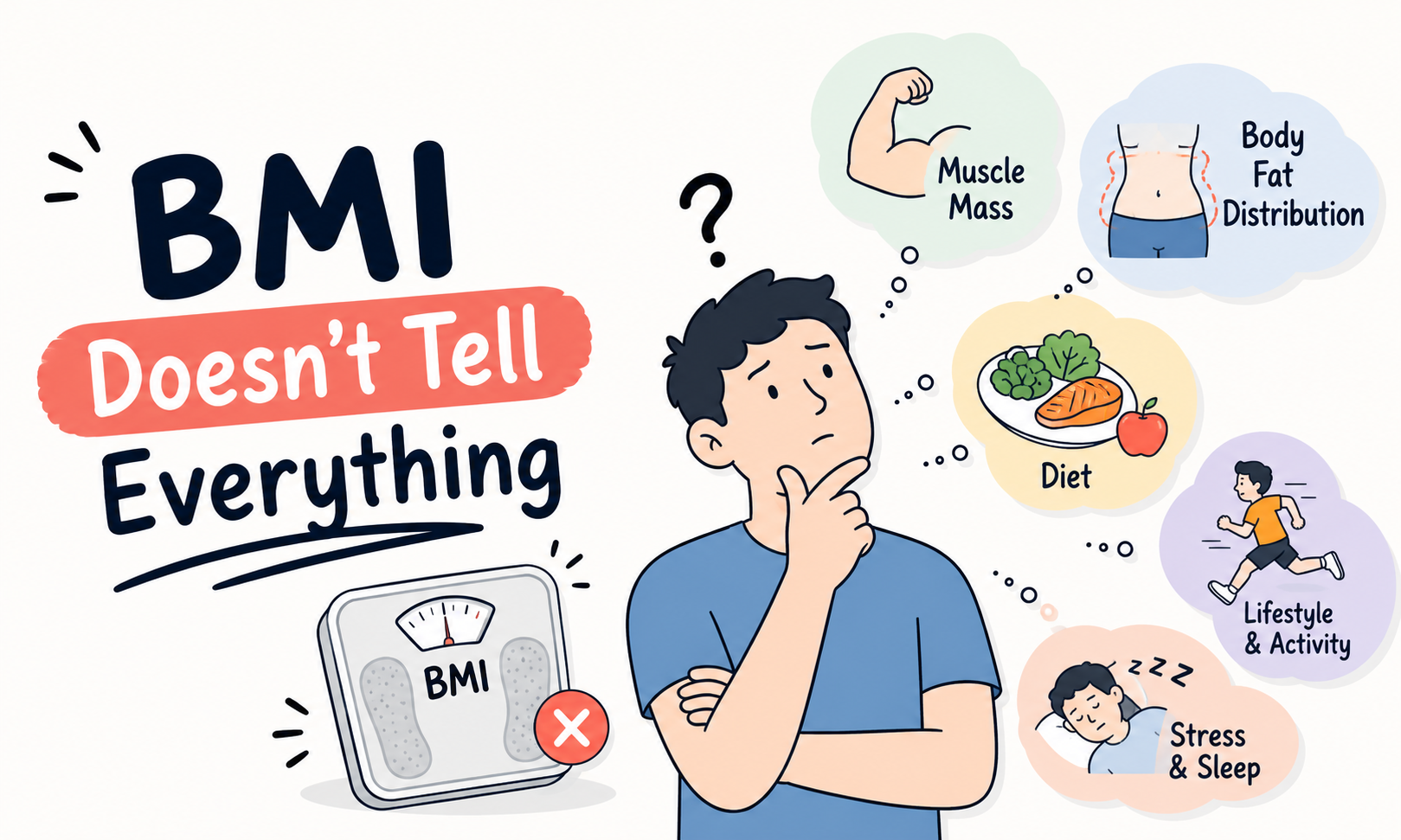
Body Mass Index (BMI) is one of the most widely used tools for assessing whether your weight is appropriate for your height. It is simple, inexpensive, and backed by decades of medical research. However, BMI has an important limitation—it doesn't tell the whole story about your health.
BMI only considers your height and weight. It cannot determine how much of your body is made up of fat, muscle, bone, or water. As a result, two people with the same BMI can have very different levels of fitness and different health risks.
This article explains why BMI should be viewed as a starting point rather than the final answer when evaluating your health.
Healthy People with High BMI
A high BMI does not automatically mean someone is unhealthy.
Many people with a BMI in the overweight range are physically fit and have excellent overall health.
Examples include:
- Competitive athletes
- Weightlifters
- Firefighters
- Military personnel
- Individuals who perform regular strength training
These individuals often have greater muscle mass, which increases body weight without increasing unhealthy body fat.
A person may have a BMI above 25 while maintaining:
- Healthy blood pressure
- Normal cholesterol levels
- Good cardiovascular fitness
- Low body fat percentage
This is one reason healthcare professionals rarely rely on BMI alone when assessing an individual's health.
Why Muscle Can Increase BMI
Muscle is denser than fat.
This means a kilogram of muscle weighs exactly the same as a kilogram of fat, but muscle occupies less space.
As a result, people with significant muscle mass often weigh more than expected for their height.
For example:
- A bodybuilder may have a BMI of 29, placing them in the overweight category.
- Their body fat percentage, however, may be well below the average for healthy adults.
BMI cannot distinguish between:
- Muscle
- Body fat
- Bone
- Water
Because of this limitation, muscular individuals may receive a BMI classification that does not accurately reflect their health.
Healthcare professionals often use additional assessments, such as body fat percentage or waist circumference, when evaluating physically active individuals.
Find Out Your BMI
BMI is still an excellent starting point for understanding your health.
Calculate your result instantly with the free Howtigo BMI Calculator and learn which BMI category you fall into.
Hidden Health Risks Despite Normal BMI
Having a BMI within the healthy range does not guarantee that you are completely healthy.
Some people have a normal BMI but still carry excess body fat, especially around the abdomen. This is sometimes referred to as normal-weight obesity.
A person with a healthy BMI may still have risk factors such as:
- High blood pressure
- High cholesterol
- Elevated blood sugar
- Excess visceral (abdominal) fat
- Low muscle mass
These hidden risks may increase the likelihood of developing:
- Type 2 diabetes
- Heart disease
- Metabolic syndrome
- Stroke
This is why doctors often evaluate other health indicators instead of relying solely on BMI.
Understanding Body Composition
Body composition describes what your body is made of rather than simply how much you weigh.
The main components include:
- Body fat
- Muscle
- Bone
- Water
- Organs
Two people may have:
- The same height
- The same weight
- The same BMI
yet have completely different body compositions.
For example:
| Person | BMI | Body Fat | Muscle Mass |
|---|---|---|---|
| Person A | 24 | 14% | High |
| Person B | 24 | 30% | Low |
Although their BMI values are identical, their overall health and fitness levels may be very different.
Healthcare professionals sometimes use additional tools to evaluate body composition, including:
- Waist circumference
- Waist-to-height ratio
- Body fat percentage
- Skinfold measurements
- Bioelectrical impedance analysis (BIA)
- DEXA scans
These measurements provide a more complete picture of health than BMI alone.
Looking Beyond BMI
BMI is a valuable screening tool, but it should never be considered the only measure of health.
A complete health assessment includes many factors, such as:
- Blood pressure
- Cholesterol levels
- Blood sugar
- Waist circumference
- Physical activity
- Diet quality
- Sleep habits
- Smoking status
- Family medical history
Rather than asking only:
"Is my BMI healthy?"
it's often more helpful to ask:
- Am I physically active?
- Am I eating a balanced diet?
- Do I have healthy blood pressure?
- Am I getting enough sleep?
- Do I have healthy cholesterol and blood sugar levels?
These factors often provide a much better understanding of long-term health than BMI alone.
BMI should be viewed as the starting point, not the final destination.
Summary
Body Mass Index remains one of the simplest and most effective tools for screening weight-related health risks, but it cannot measure body fat, muscle mass, or overall fitness. As a result, some healthy people may have a high BMI because of increased muscle, while others with a normal BMI may still have hidden health risks.
The best approach is to use BMI alongside other health indicators, including body composition, waist circumference, blood pressure, cholesterol, physical activity, and healthy lifestyle habits. Looking beyond BMI provides a more complete understanding of your overall health and helps you make better-informed decisions about your well-being.
Start by Knowing Your BMI
Although BMI doesn't tell the whole story, it's still one of the easiest ways to assess your weight status.
Use the free Howtigo BMI Calculator to calculate your BMI instantly and use it as the first step toward understanding your overall health.