
Many people focus only on the number they see on the weighing scale. While body weight is an important measurement, it doesn't provide the complete picture of your health. Two people can weigh exactly the same yet have very different health profiles because they differ in height, body composition, and muscle mass.
This is where Body Mass Index (BMI) becomes useful. BMI considers both your height and weight to estimate whether your weight falls within a healthy range. Understanding the difference between BMI and body weight can help you make better decisions about your health and fitness goals.
BMI vs Body Weight Explained
Although BMI and body weight are related, they are not the same thing.
Body weight is simply the total amount you weigh at a given moment. It includes:
- Muscle
- Fat
- Bones
- Organs
- Water
- Other body tissues
Your body weight alone doesn't indicate whether that weight is appropriate for your height.
Body Mass Index (BMI), on the other hand, compares your weight to your height using a mathematical formula.
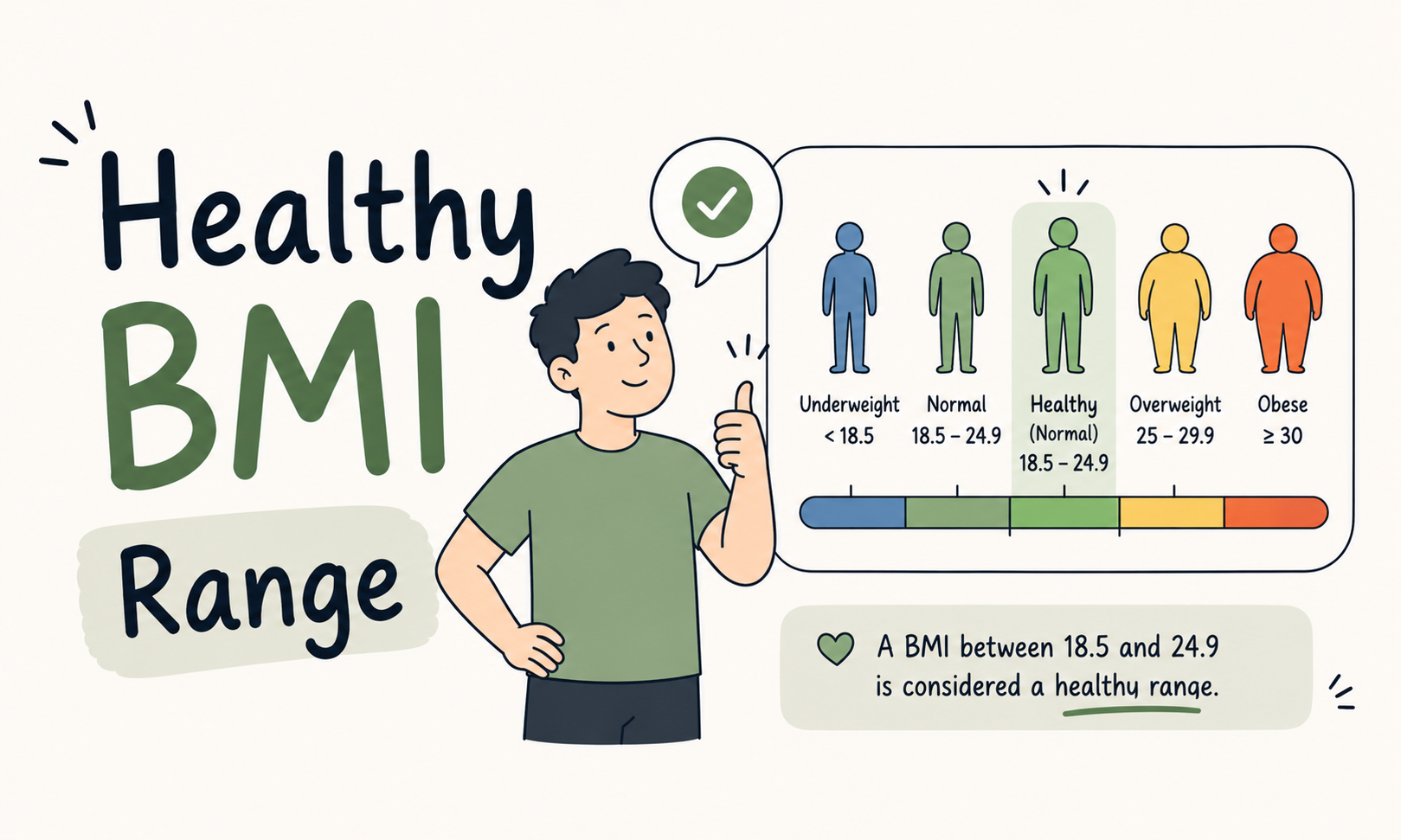
The standard BMI categories for adults are:
| BMI | Weight Category |
|---|---|
| Below 18.5 | Underweight |
| 18.5–24.9 | Healthy Weight |
| 25.0–29.9 | Overweight |
| 30.0 and above | Obesity |
Because BMI accounts for height, it provides a more meaningful estimate of healthy weight than body weight alone.
Why Weight Alone Doesn't Tell the Full Story
Stepping on a scale only tells you how much you weigh, not what your weight consists of.
For example, two people may both weigh 75 kg, but one may have:
- Higher muscle mass
- Lower body fat
- Better cardiovascular fitness
while the other may carry more body fat and have a higher risk of developing chronic diseases.
Body weight also changes throughout the day because of:
- Hydration
- Meals
- Exercise
- Clothing
- Sodium intake
These daily fluctuations don't necessarily reflect changes in your health.
BMI helps provide additional context by considering both height and weight instead of weight alone.
Check Your BMI in Seconds
Want a better understanding of your weight?
Use the free Howtigo BMI Calculator to calculate your BMI instantly and discover whether your weight falls within a healthy range.
Healthy Weight vs Healthy BMI
Many people assume that having a certain body weight automatically means they are healthy.
In reality, there is no single "healthy weight" that applies to everyone because people have different heights.
For example:
| Person | Height | Weight | BMI |
|---|---|---|---|
| Person A | 1.55 m | 70 kg | 29.1 |
| Person B | 1.85 m | 70 kg | 20.5 |
Both individuals weigh 70 kilograms, yet their BMI values place them in completely different categories.
This example shows why BMI often provides a better indication of whether weight is appropriate for a person's height.
However, a healthy BMI should also be combined with:
- Regular physical activity
- Balanced nutrition
- Good sleep habits
- Healthy blood pressure
- Normal cholesterol levels
Overall health depends on much more than a single measurement.
Which Is More Important: BMI or Weight?
Neither measurement is more important on its own.
Instead, they complement each other.
Body Weight Is Useful For
- Tracking weight loss
- Monitoring weight gain
- Following fitness progress
- Measuring changes over time
BMI Is Useful For
- Estimating healthy weight status
- Screening for weight-related health risks
- Comparing weight relative to height
- Supporting medical assessments
Healthcare professionals often use both measurements together, along with:
- Waist circumference
- Blood pressure
- Blood sugar
- Cholesterol levels
- Medical history
Using multiple health indicators provides a much more accurate assessment than relying on weight or BMI alone.
Can Two People Have the Same Weight but Different BMI?
Yes.
This is one of the biggest reasons BMI is more informative than body weight alone.
Consider the following example.
| Person | Height | Weight | BMI |
|---|---|---|---|
| Person A | 1.60 m | 80 kg | 31.2 |
| Person B | 1.90 m | 80 kg | 22.2 |
Although both people weigh exactly 80 kilograms, their BMI values are very different.
- Person A falls into the Obesity category.
- Person B falls within the Healthy Weight category.
Height significantly affects BMI because taller people naturally carry more body weight.
This is why comparing body weight between different individuals without considering height can be misleading.
Even people with identical BMI values may have different body compositions depending on:
- Muscle mass
- Body fat percentage
- Bone density
- Age
- Physical activity
For this reason, BMI should be viewed as a useful screening tool rather than a complete measure of health.
Summary
Body weight and BMI are both valuable health measurements, but they serve different purposes. Body weight tells you how much you weigh, while BMI considers both your weight and height to estimate whether your weight is appropriate for your body size.
Because BMI accounts for height, it often provides a better indication of potential weight-related health risks than body weight alone. However, neither measurement tells the full story. Factors such as muscle mass, body fat distribution, lifestyle, diet, and physical fitness all contribute to overall health.
The best approach is to use BMI together with body weight and other health indicators to gain a more complete understanding of your well-being.
Calculate Your BMI Today
Ready to see how your weight compares to your height?
Use the free Howtigo BMI Calculator to calculate your BMI instantly and better understand your current weight category and overall health.