
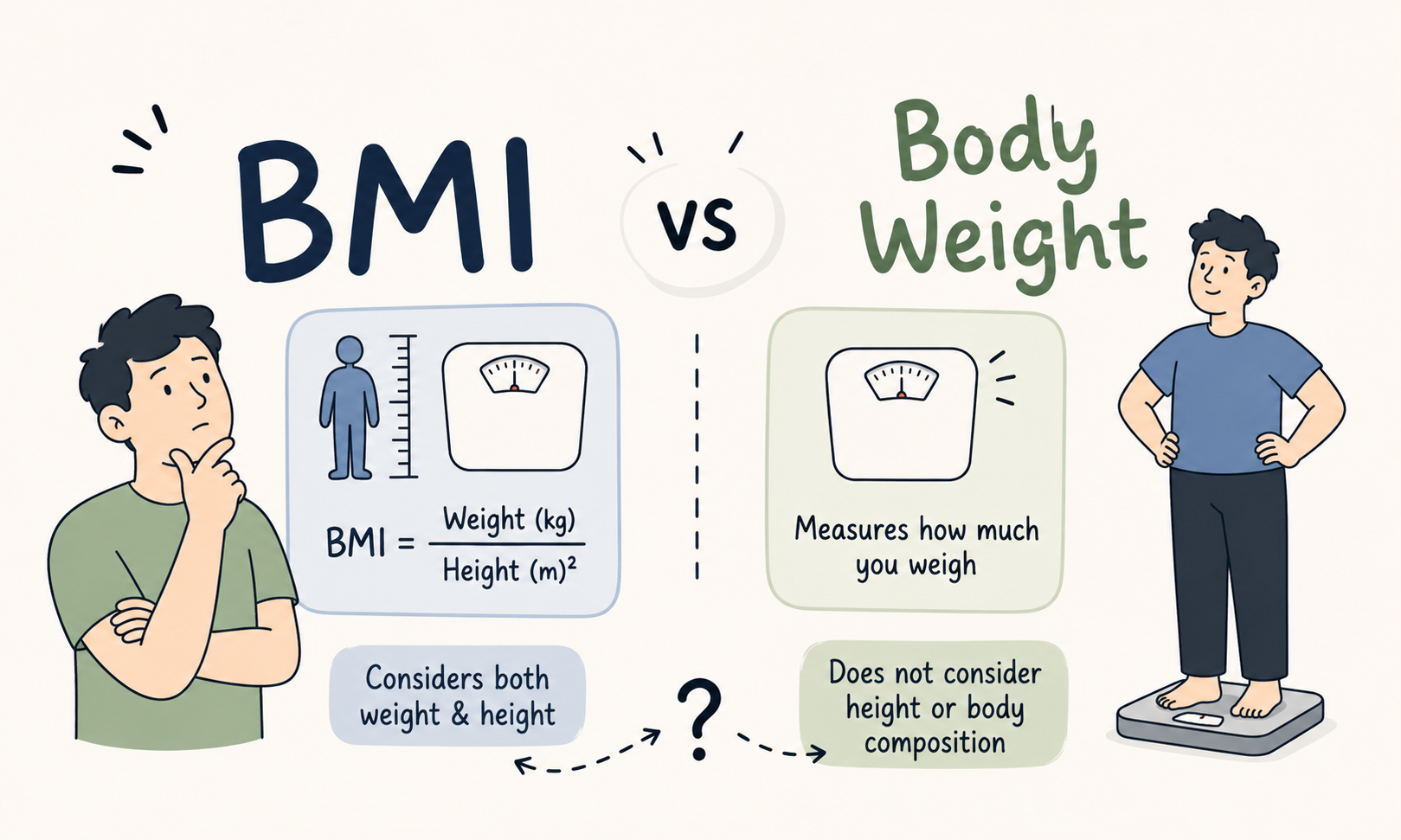
Maintaining a healthy weight is an important part of living a healthy lifestyle, and one of the simplest ways to assess whether your weight is within a recommended range is by using your Body Mass Index (BMI). BMI compares your weight with your height and places the result into a standard category that healthcare professionals use worldwide.
While BMI is not a direct measure of body fat, it provides a useful starting point for understanding your overall health. Knowing your BMI can help you identify potential health risks and decide whether lifestyle changes may be beneficial.
In this guide, you'll learn what a healthy BMI range is, why it begins at 18.5, how to read the BMI chart for adults, and what happens if your BMI is either too high or too low.
What Is a Healthy BMI?
A healthy BMI is the range that is associated with the lowest risk of developing many weight-related health conditions for most adults.
According to international health guidelines, the healthy BMI range is:
18.5 to 24.9
People whose BMI falls within this range are generally considered to have a healthy body weight relative to their height.
The standard adult BMI categories are:
| BMI | Weight Category |
|---|---|
| Below 18.5 | Underweight |
| 18.5 – 24.9 | Healthy Weight |
| 25.0 – 29.9 | Overweight |
| 30.0 and above | Obesity |
Although BMI is useful, it should always be viewed as a screening tool rather than a diagnosis. Factors such as muscle mass, age, body composition, and medical history also influence your overall health.
Healthy BMI Chart for Adults
Healthcare professionals use the same BMI classification for most adults aged 20 years and older.
| BMI Range | Classification | General Health Risk |
|---|---|---|
| Below 18.5 | Underweight | Higher risk of nutritional deficiencies |
| 18.5 – 24.9 | Healthy Weight | Lowest overall health risk |
| 25.0 – 29.9 | Overweight | Increased risk of chronic diseases |
| 30.0 – 34.9 | Obesity Class I | High health risk |
| 35.0 – 39.9 | Obesity Class II | Very high health risk |
| 40.0 and above | Obesity Class III | Extremely high health risk |
These classifications help healthcare providers identify individuals who may benefit from further medical assessment or lifestyle interventions.
It's worth remembering that BMI categories are designed for adults and should not be used for children or teenagers without age-specific growth charts.
Check Your BMI in Seconds
Not sure whether your BMI falls within the healthy range?
Use the free Howtigo BMI Calculator to calculate your BMI instantly and discover your weight category in just a few seconds.
Why the Healthy BMI Range Starts at 18.5
Many people wonder why the healthy BMI range begins at 18.5 instead of a lower number.
Research has shown that adults with a BMI below 18.5 are more likely to experience health problems associated with being underweight, including:
- Nutritional deficiencies
- Reduced muscle mass
- Lower bone density
- Fatigue
- Weakened immune function
- Increased risk of osteoporosis
On the other hand, studies have found that adults with a BMI between 18.5 and 24.9 generally have the lowest risk of developing many chronic diseases.
This range represents a balance where the body typically has enough energy reserves while avoiding many of the risks associated with excess body fat.
However, BMI is only one piece of the overall health picture. Someone with a BMI slightly outside the healthy range may still be healthy depending on factors such as physical activity, diet, muscle mass, and genetics.
What Happens If Your BMI Is Too High?
A BMI above 25 indicates that you may be carrying more body weight than is recommended for your height.
As BMI increases, so does the likelihood of developing certain health conditions.
Some of the potential risks include:
- Type 2 diabetes
- High blood pressure
- Heart disease
- Stroke
- Sleep apnea
- Fatty liver disease
- Osteoarthritis
- Certain cancers
A higher BMI doesn't automatically mean someone is unhealthy, but it does suggest that further evaluation may be beneficial.
Healthy lifestyle habits that can help lower BMI include:
- Eating a balanced diet
- Exercising regularly
- Limiting processed foods
- Managing stress
- Getting enough sleep
Even modest weight loss can significantly improve long-term health outcomes for people with overweight or obesity.
What Happens If Your BMI Is Too Low?
Being underweight can also affect your health.
A BMI below 18.5 may indicate that your body isn't receiving enough nutrients or energy to function optimally.
Possible health concerns include:
- Vitamin and mineral deficiencies
- Reduced immune function
- Muscle weakness
- Fatigue
- Low energy levels
- Fertility problems
- Increased risk of fractures
Some people naturally have a lower BMI due to genetics, while others may experience unintended weight loss because of illness or underlying medical conditions.
If your BMI is below the healthy range, it's a good idea to consult a healthcare professional to identify the underlying cause and develop an appropriate nutrition or treatment plan.
Summary
A healthy BMI range for adults is 18.5 to 24.9, and it serves as a practical guideline for assessing whether your weight is appropriate for your height. While BMI does not directly measure body fat or overall fitness, it remains one of the most widely used health screening tools because it is simple, reliable, and supported by decades of research.
Whether your BMI falls below, within, or above the healthy range, it's important to remember that overall health depends on more than a single number. A balanced diet, regular exercise, quality sleep, and routine medical checkups all play an essential role in maintaining long-term well-being.
Discover Your Healthy BMI
Want to know if your weight falls within the healthy BMI range?
Calculate your result instantly with the free Howtigo BMI Calculator and take the first step toward better health today.