
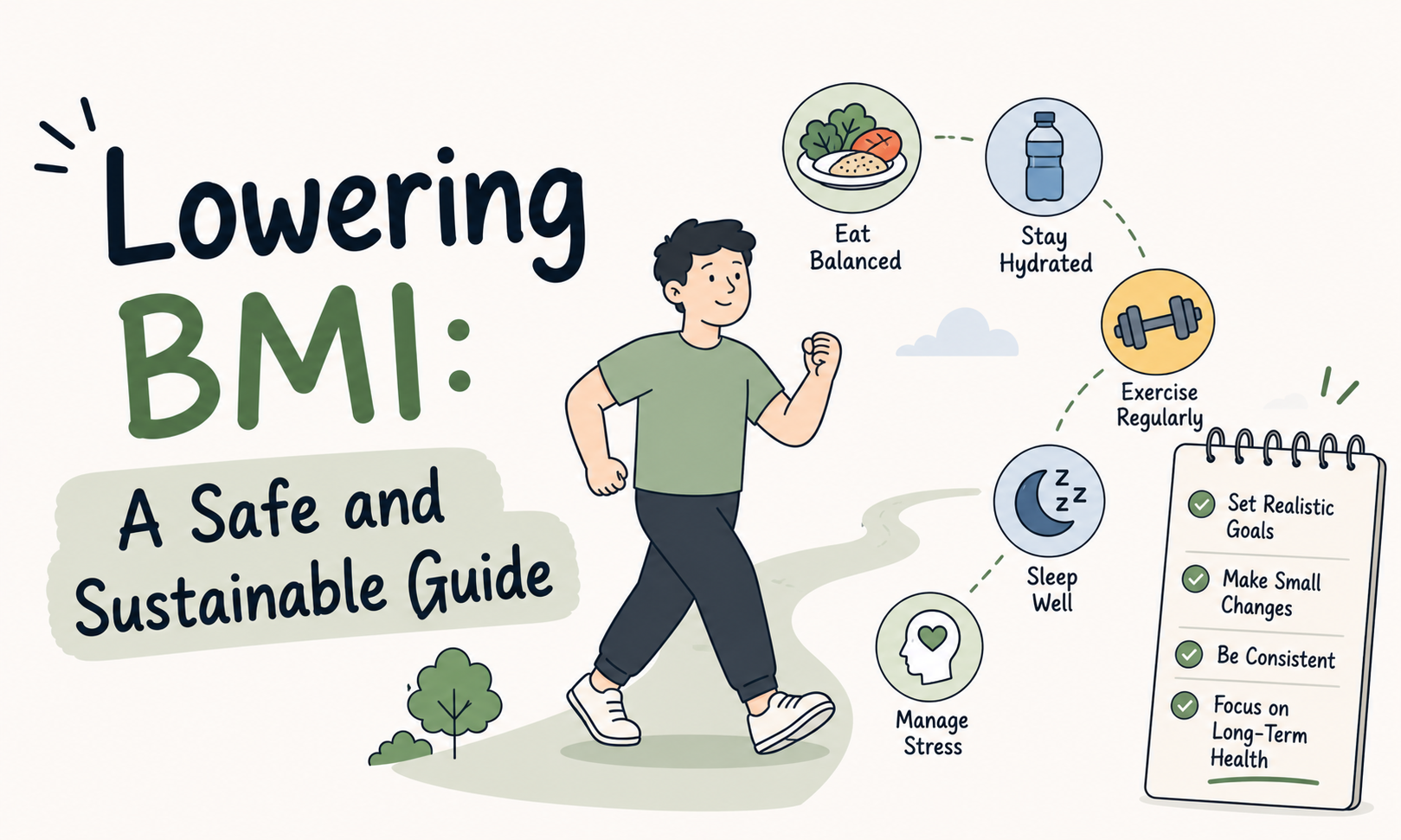
Lowering your Body Mass Index (BMI) is one of the most common health goals for people who are overweight or living with obesity. BMI is a simple calculation based on your height and weight that helps estimate whether your weight falls within a healthy range. Although BMI does not directly measure body fat, it remains one of the most widely used screening tools because it is quick, inexpensive, and supported by decades of research (World Health Organization [WHO], 2024).
If your BMI is above the recommended range, you may wonder how quickly you can lower it. The answer depends on many factors, including your current weight, eating habits, activity level, sleep, stress, age, and overall health. While rapid weight-loss programs often promise dramatic results, health experts consistently recommend gradual, sustainable weight loss because it is safer and more likely to be maintained over time (Centers for Disease Control and Prevention [CDC], 2024).
This guide explains how long it typically takes to lower BMI, the factors that influence your progress, realistic weekly weight-loss goals, and healthy expectations for your journey.
How Long Does It Take to Lower BMI?
BMI decreases whenever your body weight decreases while your height stays the same. Because healthy weight loss is gradual, BMI also changes gradually.
For most adults, experts recommend losing 0.5 to 1 kilogram (1–2 pounds) per week. This pace helps preserve muscle mass while reducing body fat and lowers the likelihood of regaining lost weight (CDC, 2024).
The amount of time needed depends on your starting BMI. Someone with a BMI of 31 may reach the overweight category within several months, while someone with a BMI of 38 may require a year or longer to reach a healthy range.
Several reasons explain why healthy weight loss takes time:
- Your body naturally adapts as weight decreases.
- Metabolism changes during long-term weight loss.
- Healthy habits need time to become routine.
- Sustainable progress is easier to maintain than crash dieting.
Instead of focusing on speed, focus on consistency. Losing weight slowly but steadily is associated with better long-term health outcomes and improved weight maintenance.
Factors That Affect BMI Changes
Every person loses weight at a different rate. Several biological and lifestyle factors influence how quickly your BMI changes.
Nutrition
A balanced eating pattern that emphasizes vegetables, fruits, whole grains, lean protein, legumes, and healthy fats supports gradual fat loss while maintaining essential nutrients.
Physical Activity
Regular exercise increases daily energy expenditure. Combining aerobic exercise with strength training is especially beneficial because it helps preserve muscle while losing fat.
Starting Weight
People with a higher body weight often lose weight more quickly during the first weeks of lifestyle changes because they have higher daily energy requirements.
Age
As people get older, metabolism generally slows and muscle mass naturally declines, making weight loss slightly more challenging.
Sleep Quality
Poor sleep affects hormones involved in appetite regulation and may increase cravings for high-calorie foods.
Stress
Long-term stress can contribute to emotional eating and make healthy habits more difficult to maintain.
Medical Conditions and Medications
Conditions such as hypothyroidism or PCOS, as well as some medications, can influence body weight. If weight management is unusually difficult, consult a healthcare professional.
Calculate Your BMI Today
Knowing your current BMI helps you monitor your progress over time.
Use the free Howtigo BMI Calculator to calculate your BMI instantly and keep track of every improvement.
Weekly Weight Loss Goals
Setting realistic goals is one of the best ways to stay motivated.
Rather than aiming for dramatic weekly changes, focus on small improvements that can be maintained.
Healthy weekly goals include:
- Losing 0.5–1 kg (1–2 lb).
- Exercising most days of the week.
- Increasing daily physical activity.
- Eating more whole foods and fewer ultra-processed foods.
- Drinking more water.
- Getting adequate sleep.
Weight loss is not always linear. Some weeks you may lose more weight, while other weeks your weight may remain unchanged. These temporary plateaus are a normal part of the process.
Remember that health improvements occur even before major BMI changes become noticeable. You may experience:
- Better stamina.
- Improved blood pressure.
- Lower blood sugar.
- Better sleep.
- Reduced waist circumference.
- Increased confidence and energy.
Celebrating these milestones helps maintain motivation.
Healthy Expectations When Lowering BMI
Lowering BMI is a long-term lifestyle project rather than a short-term challenge.
Healthy expectations include accepting that progress will vary from week to week. Occasional setbacks, holidays, illness, or stressful periods do not erase your progress. What matters most is returning to healthy habits.
Research shows that losing just 5–10% of your initial body weight can significantly improve blood pressure, cholesterol levels, blood glucose control, and overall cardiovascular health (National Heart, Lung, and Blood Institute [NHLBI], 2022).
Keep these principles in mind:
- Avoid crash diets.
- Choose foods you enjoy and can eat long term.
- Stay physically active.
- Build habits gradually.
- Track progress without becoming obsessed with daily weight fluctuations.
- Seek support from healthcare professionals if needed.
It's also important to remember that BMI is only one measure of health. Doctors often evaluate waist circumference, blood pressure, cholesterol, blood sugar, physical fitness, sleep quality, and medical history alongside BMI.
Improving your lifestyle often produces meaningful health benefits before your BMI reaches the ideal range. Better fitness, stronger muscles, improved mood, and healthier eating habits all contribute to long-term well-being.
Summary
Lowering your BMI safely requires patience, consistency, and realistic expectations. Most adults can reduce their BMI gradually by losing approximately 0.5 to 1 kilogram per week through healthy eating, regular exercise, quality sleep, and sustainable lifestyle habits. The exact timeline varies because factors such as age, metabolism, activity level, medical conditions, and starting weight all influence progress.
Rather than focusing solely on the number on the scale, aim to build habits that improve your health for years to come. Even modest weight loss can reduce the risk of chronic diseases and improve quality of life. BMI is an excellent tool for tracking progress, but it works best when considered alongside other measures of health.
Start Tracking Your Progress
Ready to take the first step?
Use the free Howtigo BMI Calculator to calculate your BMI, monitor your progress, and stay motivated as you work toward a healthier future.
References
Centers for Disease Control and Prevention. (2024). Losing weight. https://www.cdc.gov/healthy-weight-growth/losing-weight/index.html
National Heart, Lung, and Blood Institute. (2022). Aim for a healthy weight. https://www.nhlbi.nih.gov/health/educational/lose_wt/
World Health Organization. (2024). Obesity and overweight. https://www.who.int/news-room/fact-sheets/detail/obesity-and-overweight