
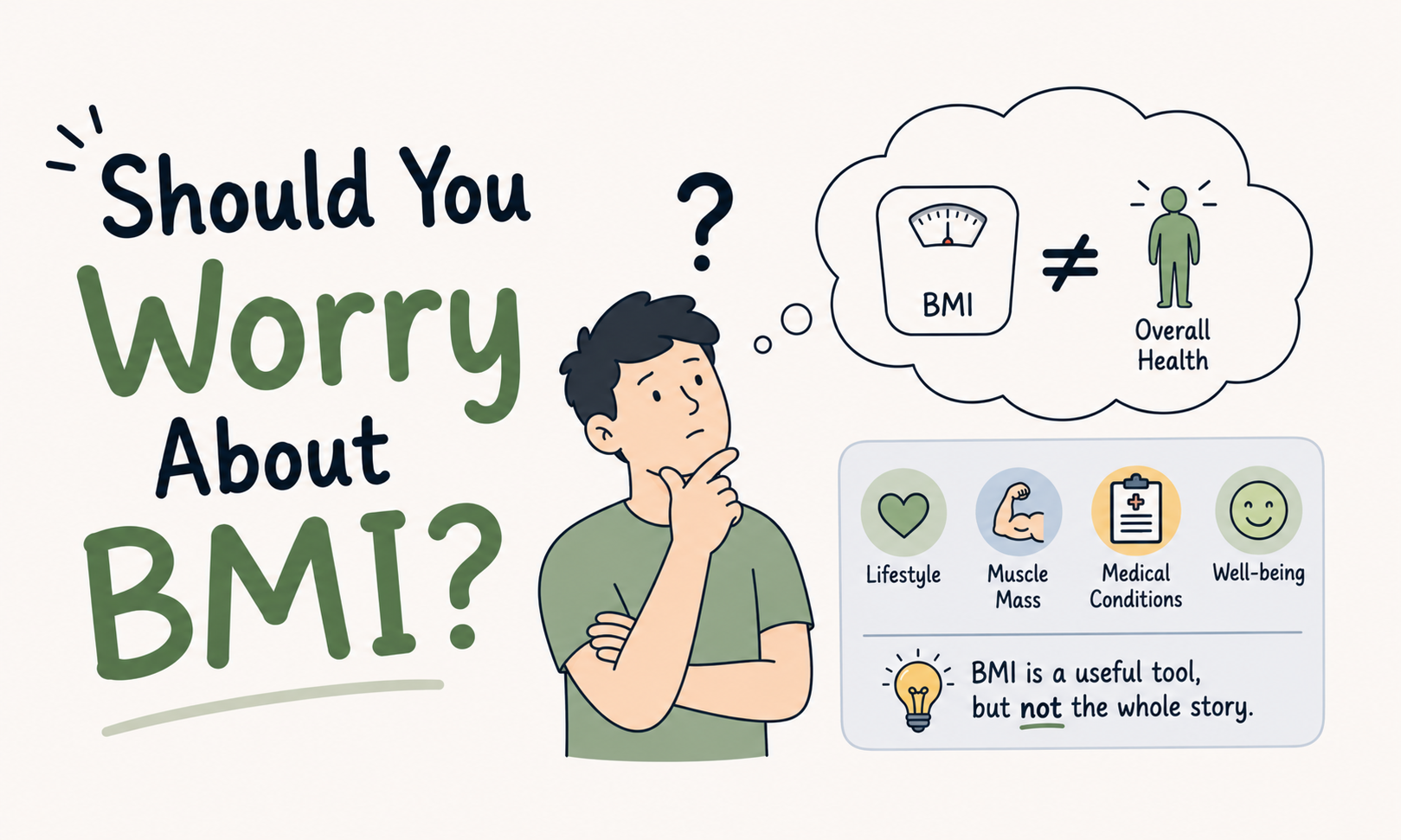
Body Mass Index (BMI) is one of the most widely used health screening tools in the world. It is simple to calculate, requires only your height and weight, and helps estimate whether your weight falls within a healthy range. Because it is easy to use, healthcare professionals frequently include BMI during routine health assessments (World Health Organization [WHO], 2024).
Despite its popularity, many people worry when they see a BMI result that is outside the healthy range. Others dismiss BMI entirely because it does not directly measure body fat. The truth lies somewhere in between. BMI is valuable as an initial screening tool, but it should never be viewed as the only indicator of health.
This guide explains when BMI deserves your attention, when it should not be your only focus, when to seek professional medical advice, and how to balance BMI with other important measures of health.
When BMI Is Worth Paying Attention To
BMI deserves attention because research consistently shows that BMI values outside the healthy range are associated with an increased risk of chronic diseases. Adults with obesity are more likely to develop conditions such as type 2 diabetes, hypertension, cardiovascular disease, sleep apnea, and certain cancers, while adults with a BMI below 18.5 may face nutritional deficiencies and reduced bone density (WHO, 2024).
If your BMI falls into the overweight or obesity category, consider it a signal to review your lifestyle rather than a reason to panic. Likewise, if your BMI is below the healthy range, it may indicate that you need further evaluation to identify possible nutritional or medical issues.
Monitoring your BMI over time is often more useful than focusing on a single measurement. Gradual increases or decreases may reveal meaningful changes in your health and encourage early action.
When BMI Shouldn't Be Your Only Focus
Although BMI is useful, it has important limitations.
BMI cannot distinguish between muscle, fat, bone, and body water. An athlete with significant muscle mass may have a high BMI despite having a low body fat percentage. Similarly, someone with a normal BMI may still carry excess abdominal fat and have an increased risk of metabolic disease.
Your overall health is influenced by many factors beyond BMI, including:
- Blood pressure
- Cholesterol levels
- Blood sugar
- Waist circumference
- Physical activity
- Nutrition
- Sleep quality
- Smoking status
- Family medical history
For this reason, healthcare professionals rarely rely on BMI alone when evaluating health. Instead, they use BMI alongside other measurements to build a more complete picture.
Check Your BMI Today
Knowing your BMI is a great first step toward understanding your health.
Use the free Howtigo BMI Calculator to calculate your BMI instantly and track changes over time.
Signs You Should Seek Medical Advice
In many situations, lifestyle changes are enough to improve BMI. However, you should seek medical advice if you notice any of the following:
- Rapid or unexplained weight gain.
- Rapid or unexplained weight loss.
- A BMI below 18.5 with fatigue or poor appetite.
- A BMI of 30 or higher accompanied by other health conditions.
- Difficulty losing weight despite healthy habits.
- Symptoms such as excessive thirst, persistent fatigue, shortness of breath, or chest pain.
A healthcare professional can evaluate possible underlying causes and recommend an individualized treatment plan. They may assess blood pressure, cholesterol, blood sugar, thyroid function, medications, or other factors affecting body weight.
Seeking help early can reduce the risk of long-term complications and improve treatment outcomes.
Balancing BMI with Overall Health
A healthy lifestyle is about far more than achieving a specific BMI number.
Consider BMI as one part of a broader health picture. Other important indicators include:
- Regular physical activity.
- Eating a balanced diet rich in fruits, vegetables, whole grains, and lean protein.
- Maintaining healthy blood pressure.
- Keeping cholesterol and blood sugar within recommended ranges.
- Sleeping 7–9 hours each night.
- Managing stress effectively.
- Avoiding tobacco and limiting alcohol consumption.
Research shows that even a modest weight loss of 5–10% of body weight can improve cardiovascular health, blood pressure, and blood sugar control, even before reaching an ideal BMI (National Heart, Lung, and Blood Institute [NHLBI], 2022).
Focus on building sustainable habits instead of chasing perfection. Healthy behaviors often produce meaningful health improvements long before your BMI reaches the recommended range.
Summary
BMI is an excellent screening tool, but it should never be the sole measure of your health. Paying attention to your BMI can help identify potential weight-related health risks early, allowing you to make positive lifestyle changes or seek medical advice when appropriate. At the same time, remember that muscle mass, body composition, physical fitness, and other health indicators also matter.
The healthiest approach is to view BMI as one piece of the puzzle. Combine it with healthy eating, regular exercise, quality sleep, routine medical checkups, and other health measurements to gain a more complete understanding of your well-being.
Frequently Asked Questions About BMI Concerns
Is a high BMI always unhealthy?
No. People with high muscle mass, such as athletes, may have a higher BMI without excess body fat.
Should I worry if my BMI is slightly above 25?
Not necessarily. Consider other factors such as waist circumference, blood pressure, diet, and physical activity. Discuss your results with a healthcare professional if you are unsure.
Can I be healthy with a normal BMI?
Yes, but a normal BMI does not guarantee perfect health. Lifestyle habits and metabolic health are equally important.
How often should I check my BMI?
Checking every few months or whenever your weight changes significantly is sufficient for most adults.
Take the First Step
Use the free Howtigo BMI Calculator to calculate your BMI instantly and use it as one part of your overall health journey.
References
Centers for Disease Control and Prevention. (2024). About adult BMI. https://www.cdc.gov/bmi/adult-calculator/index.html
National Heart, Lung, and Blood Institute. (2022). Aim for a healthy weight. https://www.nhlbi.nih.gov/health/educational/lose_wt/
World Health Organization. (2024). Obesity and overweight. https://www.who.int/news-room/fact-sheets/detail/obesity-and-overweight