
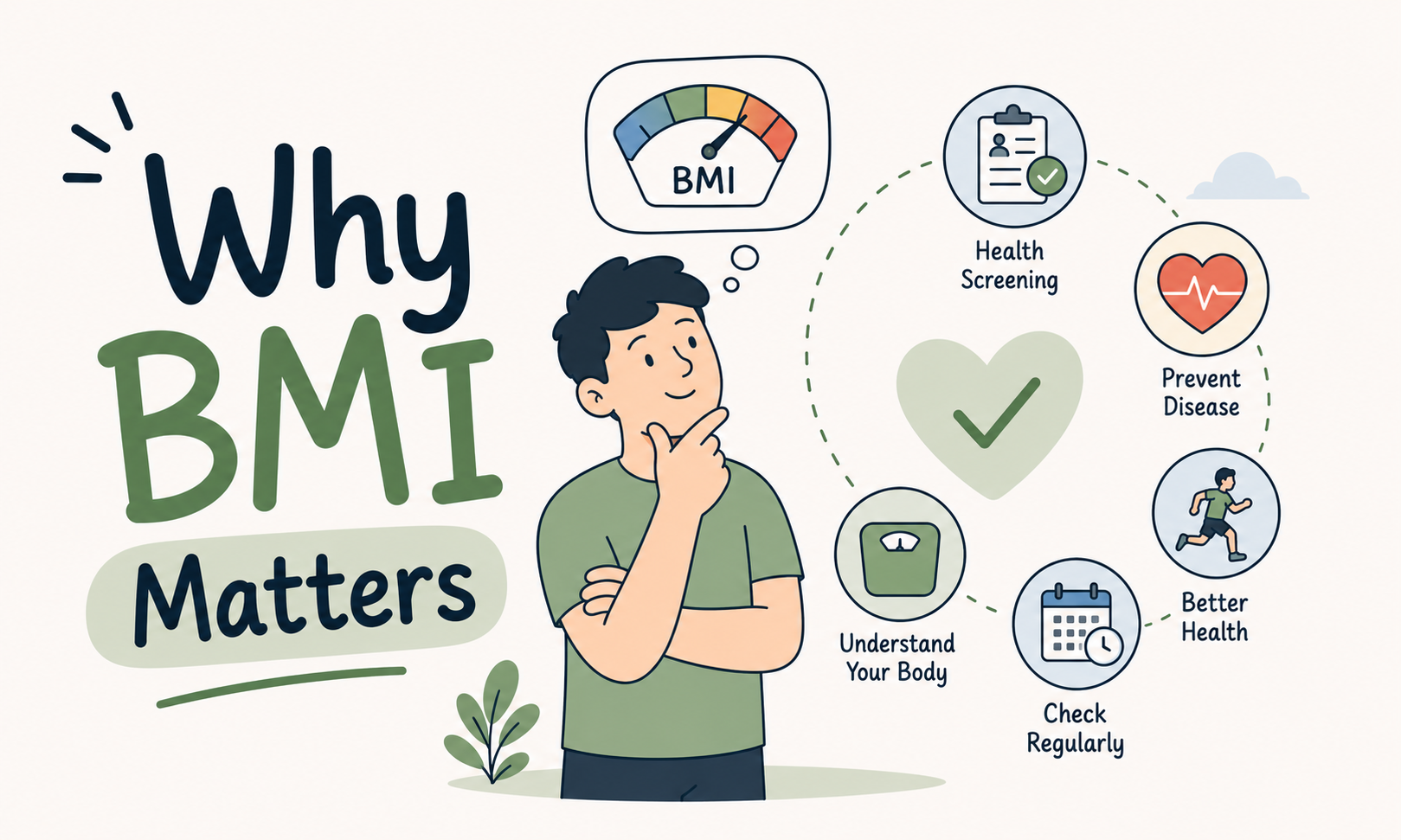
Body Mass Index (BMI) is much more than just a number. It is one of the most commonly used health indicators around the world because it offers a quick way to estimate whether your weight is appropriate for your height. While BMI cannot diagnose diseases or measure body fat directly, it serves as a valuable screening tool that helps identify people who may be at increased risk of weight-related health conditions.
Healthcare professionals, researchers, and public health organizations have relied on BMI for decades because it is simple, affordable, and supported by extensive research. Understanding why BMI matters can help you make informed decisions about your health and encourage positive lifestyle changes before problems become more serious.
Why Doctors Use BMI
Doctors use BMI because it provides a fast and standardized method of evaluating whether a person's weight falls within a healthy range.
Unlike more complex body composition tests, BMI only requires two measurements:
- Height
- Weight
This makes it practical during routine health checkups.
BMI helps doctors quickly identify patients who may benefit from additional medical assessments or lifestyle advice. For example, a person with a BMI outside the healthy range may be encouraged to undergo further evaluations such as:
- Blood pressure checks
- Cholesterol testing
- Blood sugar screening
- Waist circumference measurement
It's important to remember that BMI is not a diagnosis. Instead, it helps doctors decide whether further investigation is necessary.
BMI as a Health Screening Tool
BMI is considered a screening tool, meaning it helps identify potential health risks rather than confirming a medical condition.
Healthcare providers often use BMI as the first step in assessing overall health because it can indicate whether someone may be at increased risk for diseases associated with being underweight or overweight.
BMI categories for adults include:
| BMI | Category |
|---|---|
| Below 18.5 | Underweight |
| 18.5–24.9 | Healthy Weight |
| 25.0–29.9 | Overweight |
| 30.0 and above | Obesity |
These categories provide a simple framework for evaluating weight status and determining whether additional health assessments are appropriate.
Because BMI is easy to calculate, it is also widely used in:
- Hospitals
- Clinics
- Fitness centers
- Workplace wellness programs
- Public health research
Know Your BMI Today
Understanding your BMI is one of the easiest ways to monitor your overall health.
Use the free Howtigo BMI Calculator to calculate your BMI instantly and find out which weight category you belong to.
Benefits of Knowing Your BMI
Knowing your BMI gives you a better understanding of your current health status and can motivate you to make healthier choices.
Some of the key benefits include:
Early Awareness
BMI helps you recognize whether your weight is outside the recommended range before noticeable health problems develop.
Better Health Planning
Knowing your BMI allows you to set realistic health and fitness goals based on your current weight status.
Tracking Progress
Whether you're trying to lose weight, gain weight, or maintain a healthy lifestyle, BMI provides a simple way to monitor your progress over time.
Improved Communication with Healthcare Providers
Understanding your BMI makes it easier to discuss your health with doctors, dietitians, or fitness professionals.
Motivation for Healthy Habits
Many people become more motivated to exercise regularly and eat a balanced diet after learning their BMI.
When BMI Can Help Prevent Disease
One of the greatest advantages of BMI is its role in preventive healthcare.
A BMI outside the healthy range can serve as an early warning sign that encourages individuals to make lifestyle changes before chronic diseases develop.
People with higher BMI values may have an increased risk of:
- Type 2 diabetes
- High blood pressure
- Heart disease
- Stroke
- Sleep apnea
- Osteoarthritis
- Fatty liver disease
- Certain cancers
Similarly, people with a BMI below the healthy range may face risks such as:
- Nutritional deficiencies
- Reduced muscle mass
- Weak immune function
- Osteoporosis
- Fatigue
By identifying these risks early, BMI supports preventive healthcare rather than waiting until symptoms appear.
Why You Should Check Your BMI Regularly
Your body weight naturally changes over time due to age, lifestyle, diet, physical activity, pregnancy, illness, or other factors.
Checking your BMI regularly allows you to monitor these changes and respond before they become significant health concerns.
Regular BMI checks can help you:
- Monitor weight-loss progress
- Track weight gain during fitness programs
- Identify unhealthy weight changes
- Stay motivated toward health goals
- Support long-term disease prevention
However, BMI should never be the only measure of health.
For the most complete assessment, combine BMI with:
- Waist circumference
- Blood pressure
- Cholesterol levels
- Blood sugar tests
- Physical activity
- Healthy eating habits
- Routine medical checkups
Together, these provide a much clearer picture of your overall well-being.
Summary
BMI matters because it offers a simple, reliable, and scientifically supported way to assess whether your weight is appropriate for your height. While it cannot measure body fat directly or diagnose health conditions, it serves as an effective screening tool that helps identify individuals who may be at increased risk of weight-related diseases.
Regularly checking your BMI can help you monitor your health, track progress toward your fitness goals, and encourage healthier lifestyle choices. Combined with balanced nutrition, regular exercise, and routine medical care, BMI can play an important role in maintaining long-term health and preventing chronic disease.
Take the First Step Toward Better Health
Curious about your BMI?
Use the free Howtigo BMI Calculator to calculate your Body Mass Index instantly and gain valuable insights into your overall health.