
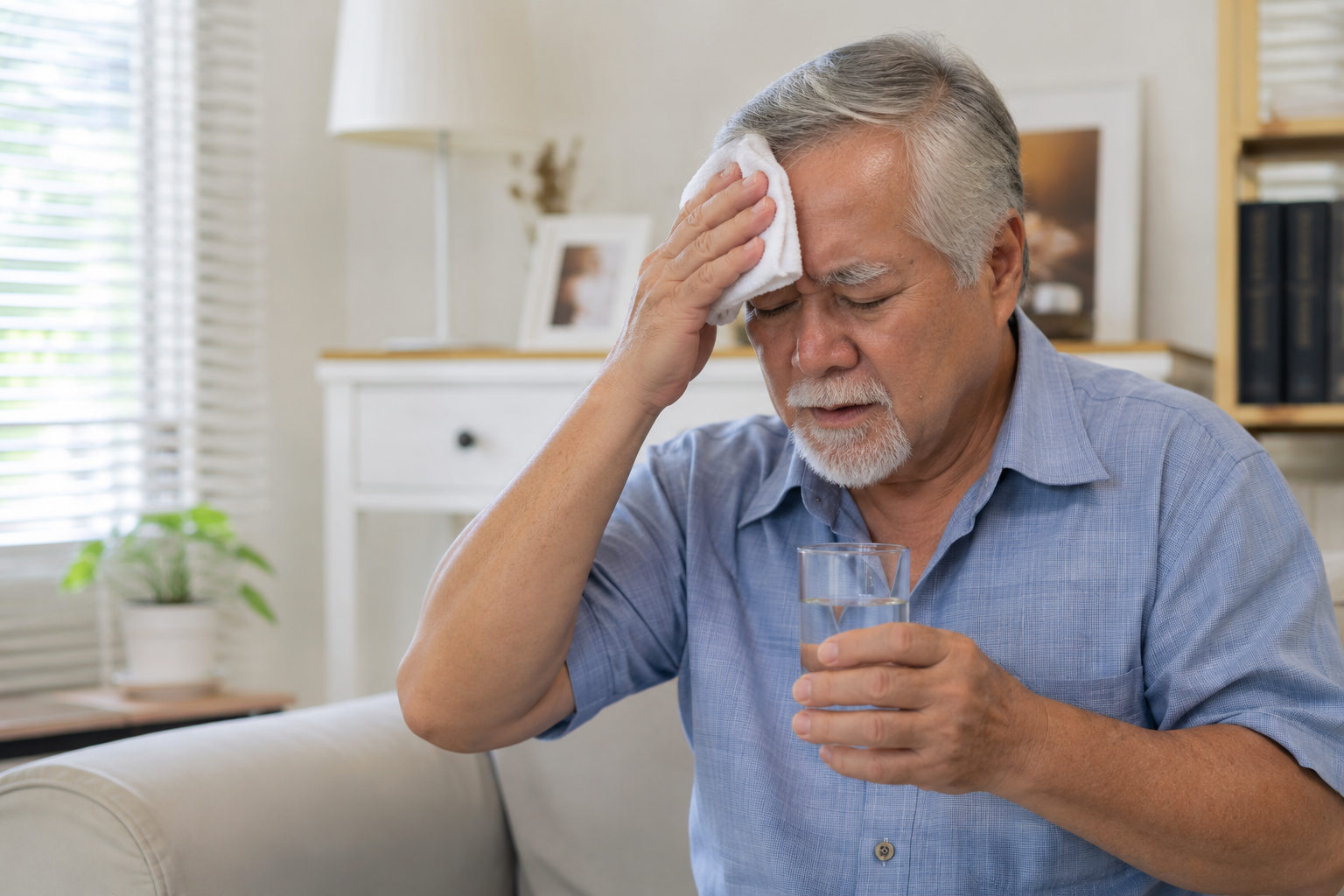
If you are looking for a water intake calculator by age, it is important to understand that age alone cannot determine exactly how much fluid you need each day. Hydration needs are influenced by body size, activity, climate, diet, illness, pregnancy, medications, and other factors.
Age can still provide useful context. Children have different fluid requirements from adults, while older adults may be more vulnerable to dehydration because thirst can become less noticeable with age.
Does Water Intake Change With Age?
Yes, but not in a simple "more age equals more water" pattern.
The National Academies provides adequate-intake values for total water, which includes drinking water, other beverages, and water contained in food. For adults, the reference values are approximately 3.7 liters per day for men and 2.7 liters per day for women. These are population-based adequate-intake values rather than exact requirements for every person.
Daily Fluid Needs for Adults
For adults, there is no single amount of plain water that everyone needs.
The National Academies' figures are useful for understanding total water intake:
| Group | Adequate intake of total water |
|---|---|
| Adult men | About 3.7 L/day |
| Adult women | About 2.7 L/day |
These amounts include water from beverages and food.
This is why a calculator should be viewed as a starting estimate rather than a rigid daily target.
Hydration for Younger Adults
Healthy younger adults generally regulate body water effectively through thirst, drinking behavior, and normal kidney function.
Daily fluid needs can still vary substantially.
Hydration for Older Adults
Older adults deserve particular attention to hydration.
The National Institute on Aging notes that the sense of thirst may decrease with age. This means an older person may not always feel thirsty even when regular fluid intake is important.
The CDC also identifies adults aged 65 and older as being at increased risk of heat-related health problems.
Why Older Adults May Be at Greater Risk of Dehydration
Several factors can make hydration more challenging with age.
Thirst sensation may become less noticeable. Some people may also have mobility limitations, bladder concerns, difficulty accessing drinks, or medications that affect fluid balance.
Chronic medical conditions can also influence how much fluid a person should consume.
For this reason, an older adult should not automatically follow a generic online calculation if a healthcare professional has provided individualized fluid guidance.
Age vs Body Weight for Water Needs
When estimating fluid intake for an individual adult, body weight can provide a useful starting point.
One commonly used general estimate is around 30–35 mL of fluid per kilogram of body weight per day.
For example, a 70 kg adult would calculate:
70 × 30 = 2,100 mL
70 × 35 = 2,450 mL
That produces a starting range of about 2.1–2.45 liters per day.
This weight-based estimate is different from the National Academies' population-level adequate-intake values because the methods answer different questions.
A weight formula estimates an individual starting range, while an adequate intake is a population reference value.
Activity Level and Hydration
Physical activity increases fluid losses through sweating and breathing.
The more intensely and for longer you exercise, the more important fluid replacement can become.
Your hydration needs can also vary with:
- Exercise intensity
- Exercise duration
- Sweat rate
- Temperature
- Humidity
- Clothing
- Access to fluids
A 65-year-old who walks indoors for 30 minutes does not necessarily need the same hydration approach as a 25-year-old running outdoors for two hours.
Hot Weather and Hydration
Hot weather can increase fluid losses and heat-related health risks.
The CDC specifically identifies older adults as a higher-risk group during heat. It recommends staying hydrated and notes that older adults may not adjust as well to sudden temperature changes.
During hot weather:
- Drink fluids regularly.
- Keep water accessible.
- Spend time in cooler environments when needed.
- Pay extra attention during outdoor activity.
- Follow individualized medical advice if you have a fluid restriction.
Illness and Fluid Requirements
Illness can change hydration needs.
Fever, vomiting, and diarrhea can increase fluid losses. In these situations, simply following your usual age-based or weight-based target may not be enough.
Some illnesses can also require fluid restriction rather than increased intake.
Pregnancy and Breastfeeding
Pregnancy and breastfeeding can change fluid requirements.
The National Academies' reference information treats pregnancy and lactation as distinct life stages when considering total water intake.
However, pregnancy is not simply another age category. A pregnant or breastfeeding person should consider guidance appropriate to that stage of life.
Why Age Alone Cannot Determine Water Needs
Age does not tell a calculator how much someone sweats, how active they are, what the weather is like, or whether they have a medical condition.
Two people of the same age may have very different fluid requirements.
For example:
- One may exercise daily.
- One may work outdoors.
- One may eat a water-rich diet.
- One may take medication affecting fluid balance.
- One may have been told to restrict fluids.
This is why age is best viewed as one contextual factor rather than the main determinant.
Water vs Total Fluid Intake
When discussing daily water needs, it is important to distinguish plain drinking water from total water intake.
Total water includes:
- Drinking water
- Other beverages
- Moisture in foods
Fruits, vegetables, soups, milk, and other foods and drinks can contribute to total fluid intake.
Therefore, a reference value such as 2.7 or 3.7 liters of total water does not mean that everyone should drink that exact amount as plain water.
How to Monitor Hydration
For everyday hydration, several simple observations can help.
Thirst is an important signal. Urine color can also provide a rough indication of hydration, although it can be affected by foods, supplements, and medications.
During hot weather, the CDC recommends paying attention to hydration and heat-related symptoms.
How a Water Intake Calculator Estimates Daily Needs
A Water Intake Calculator can provide a convenient estimate based on information such as:
- Body weight
- Activity level
- Age
- Other inputs supported by the calculator
The BMR Calculator and Calorie Calculator can provide separate estimates for energy needs, but they do not replace individualized hydration guidance.
When to Follow Individualized Medical Advice
A general calculator may not be appropriate as your primary guide if you have:
- Kidney disease
- Heart conditions affecting fluid management
- A prescribed fluid restriction
- Significant vomiting or diarrhea
- A medication that affects fluid balance
- Another condition for which your clinician has given hydration instructions
If a healthcare professional has told you to limit or increase fluids, follow that guidance rather than trying to replace it with an age-based formula.
A Practical Approach to Water Intake by Age
Instead of looking for one perfect number, use a simple framework:
1. Consider age.
Age can indicate whether special hydration considerations may apply.
2. Consider body size.
Weight can provide a useful starting estimate for adults.
3. Consider daily conditions.
Exercise, sweating, heat, illness, and diet can change fluid needs.
4. Consider medical guidance.
Certain conditions and medications require individualized recommendations.
5. Track patterns.
Look at your regular fluid intake and hydration signals rather than reacting to one calculation.
Summary
There is no single water intake calculator by age that can determine the perfect amount of water for everyone.
For healthy adults, the National Academies' adequate-intake values for total water are approximately 3.7 liters per day for men and 2.7 liters for women, including water from food and beverages. A separate weight-based estimate of around 30–35 mL per kilogram per day can provide a practical starting range for an individual adult.
Older adults may need to pay particular attention to hydration because thirst can become less noticeable and heat-related risks can increase.
Exercise, hot weather, illness, pregnancy, breastfeeding, medications, and medical conditions can all change fluid needs.
Use the Water Intake Calculator as an estimate, not a prescription. When medical conditions or fluid restrictions are involved, individualized healthcare advice should take priority.
References
Institute of Medicine. (2005). Dietary reference intakes for water, potassium, sodium, chloride, and sulfate. The National Academies Press. https://doi.org/10.17226/10925
Centers for Disease Control and Prevention. (2026). About water and healthier drinks. U.S. Department of Health and Human Services. https://www.cdc.gov/healthy-weight-growth/water-healthy-drinks/
Centers for Disease Control and Prevention. (2024). Heat and older adults (aged 65+). U.S. Department of Health and Human Services. https://www.cdc.gov/heat-health/risk-factors/heat-and-older-adults-aged-65.html
National Institute on Aging. (2019). Healthy eating after 50. National Institutes of Health. https://order.nia.nih.gov/sites/default/files/2019-10/Healthy-Eating-2019-update-508.pdf
National Institute on Aging. (2022). Hot weather safety for older adults. National Institutes of Health. https://www.nia.nih.gov/health/safety/hot-weather-safety-older-adults