
Healthy Weight Scale: How to Measure and Understand Your Weight
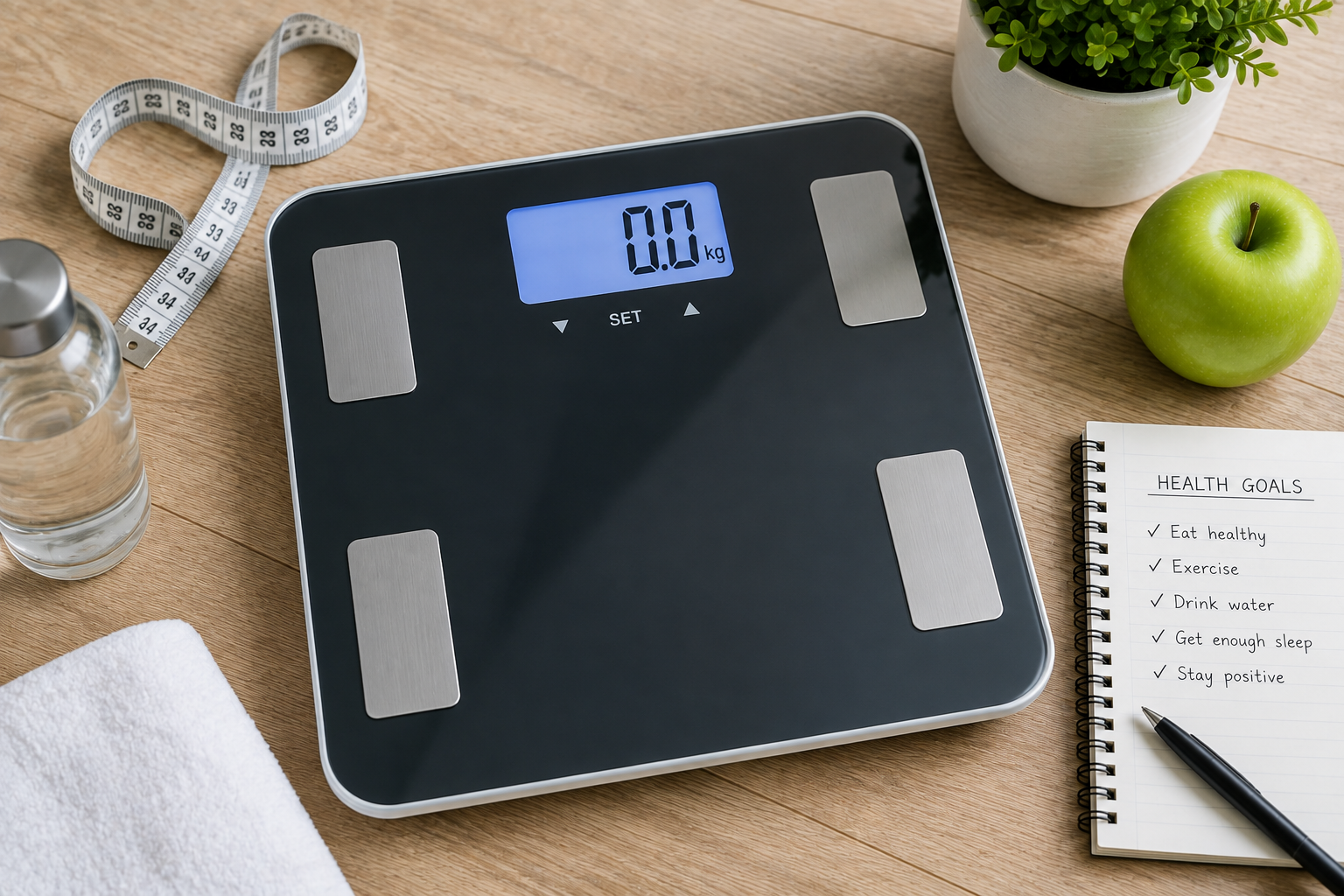
If you searched for a healthy weight scale, you may be looking for a bathroom scale that can tell you whether your weight is healthy. A scale can measure your body weight, but it cannot determine your overall health from the number alone.
This guide explains how bathroom scales work, what your weight reading actually means, why weight can change from day to day, and how to track your weight more consistently.
What Is a Healthy Weight Scale?
There is no special scale reading that automatically means you are healthy.
A bathroom scale measures your current body weight. For adults, BMI is one commonly used screening tool. A BMI from 18.5 to less than 25 is classified as the standard healthy-weight category.
How Bathroom Scales Measure Weight
A bathroom scale measures the force associated with your body being on the scale and displays the result as a weight measurement, usually in kilograms or pounds.
Digital scales use sensors to detect the load placed on the platform and convert that measurement into a displayed number.
A basic, reliable scale can be enough if you:
- Use the same scale consistently.
- Place it on a firm, level surface.
- Weigh under similar conditions.
- Record your results.
- Focus on trends rather than isolated readings.
What Does a Healthy Weight Actually Mean?
A healthy weight is not one universal number.
For adults, BMI provides a practical way to relate weight to height:
BMI = weight in kilograms ÷ height in meters²
The standard adult categories are:
| BMI | Category |
|---|---|
| Below 18.5 | Underweight |
| 18.5–24.9 | Healthy weight |
| 25.0–29.9 | Overweight |
| 30.0 or higher | Obesity |
These categories are screening tools, not diagnoses. BMI does not directly measure body fat and can be less informative for some people, including highly muscular individuals.
Weight vs. BMI
Weight tells you how much you currently weigh.
BMI puts that weight into the context of your height.
For example, 70 kg means something different for a person who is 1.50 m tall compared with someone who is 1.80 m tall.
Suppose a person weighs 70 kg and is 1.70 m:
BMI = 70 ÷ 1.70² ≈ 24.2
The BMI is within the standard adult healthy-weight category.
This is why a scale alone cannot answer whether your weight is appropriate for your height.
You can calculate your current BMI with the Howtigo BMI Calculator.
How to Interpret Your Scale Reading
When you step on a scale, treat the number as one measurement rather than a complete health assessment.
For example, a reading of 72.0 kg followed by 72.6 kg the next morning does not necessarily mean you gained 0.6 kg of body fat.
Short-term scale changes can be influenced by:
- Water retention
- Food and drinks still being digested
- Sodium intake
- Carbohydrate intake
- Bowel contents
- Hormonal changes
- Physical activity
- Time of day
Why Scale Weight Changes From Day to Day
Daily weight fluctuations are normal.
Your body contains water, food, and other materials that change from day to day. A salty meal, a change in carbohydrate intake, strenuous exercise, or simply weighing at a different time can affect the number on the scale.
NIDDK guidance recommends regular weight tracking, while a lifestyle program from NIH emphasizes using the same scale and similar timing when monitoring changes.
Healthy Weight Ranges
A healthy weight range is usually more useful than a single target number.
For adults, you can estimate the weight associated with the standard BMI range using:
Lower weight = 18.5 × height²
Upper weight = 24.9 × height²
For someone who is 1.70 m tall:
18.5 × 1.70² ≈ 53.5 kg
24.9 × 1.70² ≈ 71.9 kg
So the approximate BMI-based healthy-weight range is 53.5–71.9 kg.
This is a mathematical reference range, not a personalized diagnosis or guarantee of health.
How Height Affects Healthy Weight
Height is important because BMI is calculated using both weight and height.
A taller person can weigh more than a shorter person while having the same BMI.
For example, at a BMI of 22:
- 1.60 m corresponds to about 56.3 kg
- 1.80 m corresponds to about 71.3 kg
Both values produce approximately the same BMI.
This explains why there is no single "healthy weight" number that applies to everyone.
If you want a formula-based reference rather than a BMI range, you can also use the Howtigo Ideal Body Weight Calculator.
When Is Body Fat Percentage Useful?
Body-fat percentage can provide additional information because BMI and scale weight do not directly tell you how much of your weight is fat.
Some smart scales estimate body-fat percentage using bioelectrical impedance. These readings can vary with hydration and other factors, so they are best used for observing trends under consistent conditions rather than treating one reading as exact.
You can explore an estimate with the Howtigo Body Fat Calculator.
Why Scale Weight Alone Does Not Measure Health
Scale weight is only one part of health assessment.
NIDDK notes that BMI and waist size can help assess whether an adult is at a healthy weight, while other factors also matter.
A person can have a BMI in the healthy range and still have other health concerns. Likewise, BMI can be less informative in people with unusually high muscle mass.
The scale is therefore a useful tracking tool, not a complete health test.
How to Track Weight Properly
For useful weight tracking, consistency matters more than complexity.
A simple approach is:
- Use the same scale.
- Place it on a hard, level surface.
- Weigh under similar conditions.
- Use similar clothing or no clothing.
- Record the measurement.
- Look at weekly or longer-term trends.
- Avoid reacting to every small fluctuation.
NIDDK recommends weighing regularly and keeping a record of changes to help track progress.
Using BMI and Other Measurements Together
A better way to understand your weight is to combine several measurements.
For example:
Scale weight → tells you your current body weight.
BMI → relates your weight to height.
Waist circumference → provides information about abdominal fat and associated health risk.
Body-fat estimate → provides additional information about body composition.
Other health measures → help put weight into a broader health context.
NHLBI and NIDDK both identify BMI and waist circumference as useful measures when assessing weight-related health risk.
Summary
If you are looking for a healthy weight scale, remember that a scale measures weight, not overall health.
Key points:
- A bathroom scale measures your current body weight.
- There is no single scale number that defines a healthy person.
- BMI relates weight to height and provides a useful adult screening measure.
- The standard adult healthy BMI category is 18.5 to less than 25.
- Daily weight changes can result from water, food, sodium, activity, and other factors.
- Weight trends are generally more useful than isolated readings.
- Body-fat percentage can add information about body composition.
- Waist circumference can provide additional information about abdominal fat and health risk.
- Using the same scale and similar weighing conditions improves consistency.
- Weight, BMI, body composition, and other health measurements work better together than any one measurement alone.
For a quick check of how your weight relates to your height, use the Howtigo BMI Calculator.
You can also compare your result with the Howtigo Ideal Body Weight Calculator and explore body composition with the Howtigo Body Fat Calculator.
References
National Institute of Diabetes and Digestive and Kidney Diseases. (2023). Am I at a healthy weight? National Institutes of Health. https://www.niddk.nih.gov/health-information/weight-management/adult-overweight-obesity/am-i-healthy-weight
National Institute of Diabetes and Digestive and Kidney Diseases. (2023). Eating & physical activity to lose or maintain weight. National Institutes of Health. https://www.niddk.nih.gov/health-information/weight-management/adult-overweight-obesity/eating-physical-activity
National Heart, Lung, and Blood Institute. (2024). Overweight and obesity: Symptoms and diagnosis. National Institutes of Health. https://www.nhlbi.nih.gov/health/overweight-and-obesity/symptoms
National Heart, Lung, and Blood Institute. (2025). Aim for a healthy weight. National Institutes of Health. https://www.nhlbi.nih.gov/health/heart-healthy-living/healthy-weight
National Institute of Diabetes and Digestive and Kidney Diseases. (2017). Body Weight Planner. National Institutes of Health. https://www.niddk.nih.gov/health-information/weight-management/body-weight-planner